Bilateral Amputee Prosthetics: Unique Challenges and Solutions

A bilateral amputee faces physical and emotional demands that multiply quite significantly, and these individuals rely on key resources to help them move on with their lives. The team at Durrett’s Orthotics & Prosthetics recognizes that losing both limbs creates a different set of hurdles than losing a single limb, and that the path to restored mobility demands careful planning.
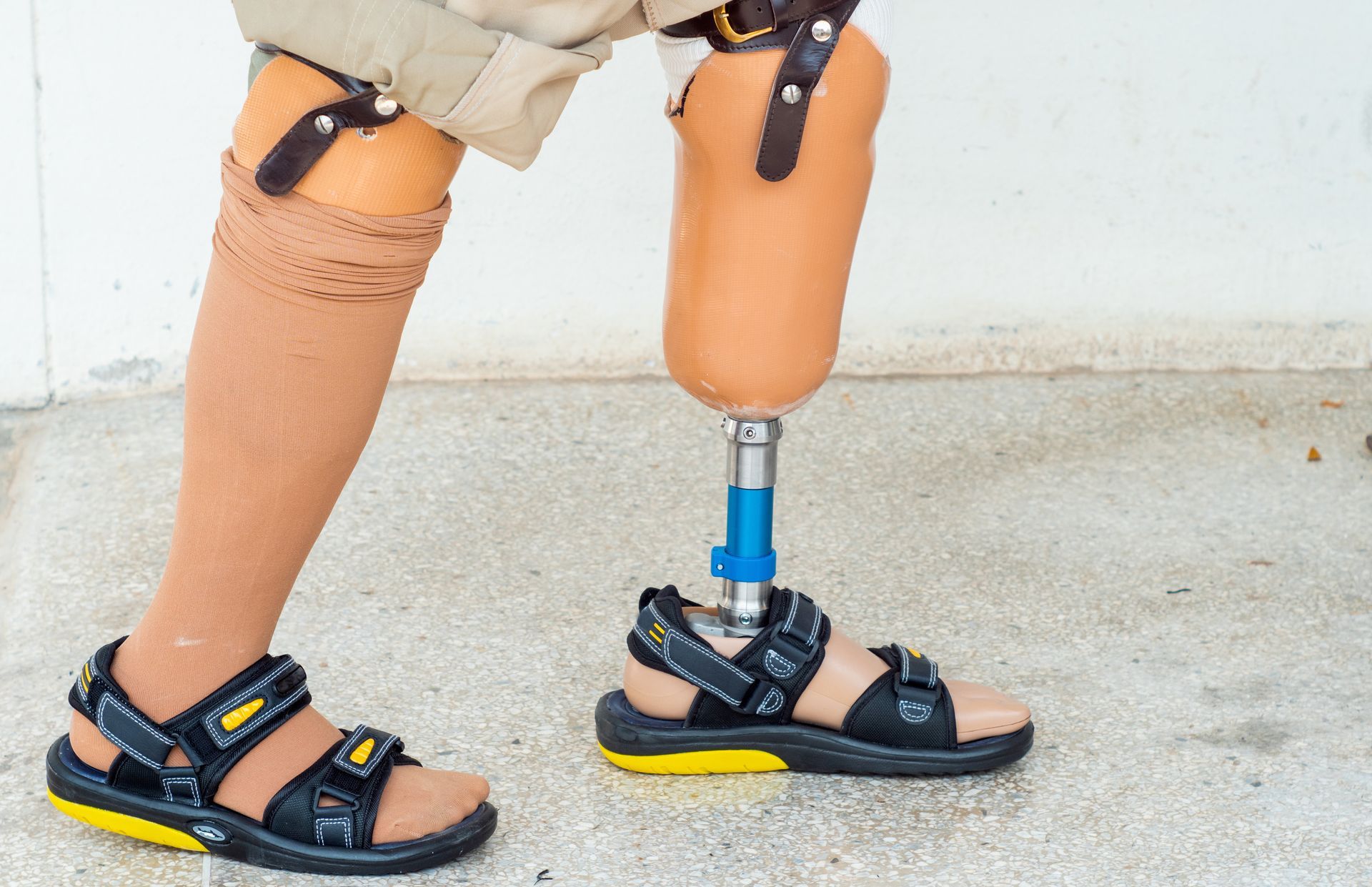
Facing the Reality of Being a Bilateral Amputee
When both limbs are absent, the body loses natural reference points for balance and proprioception, which is the internal sense of where the body exists in space. A person adapting to one prosthetic limb relies on an intact side for stability, but those with double limb loss must develop new neuromuscular patterns without that advantage. This lack of a sound side often results in longer rehabilitation timelines and fitting processes requiring extreme precision.
Energy expenditure also plays a primary role in recovery, as walking with a bilateral prosthesis requires greater cardiovascular effort than using natural limbs. While the increase is manageable for those using a bilateral below-knee prosthesis, metabolic demand rises for individuals with higher-level loss. Recognizing these physiological facts helps patients and clinicians set realistic goals as they build progressive training plans.
Design Considerations for a Bilateral Prosthesis
Fitting a bilateral prosthesis involves more than doubling a single-limb prescription because every component choice on each side influences how the other side compensates. Socket fit is the most vital element, since users bear their entire body weight across two interfaces. A minor pressure point that a unilateral user might tolerate becomes debilitating when replicated on both sides, which makes exceptional suspension a necessity.
Success With a Bilateral Below-Knee Prosthesis
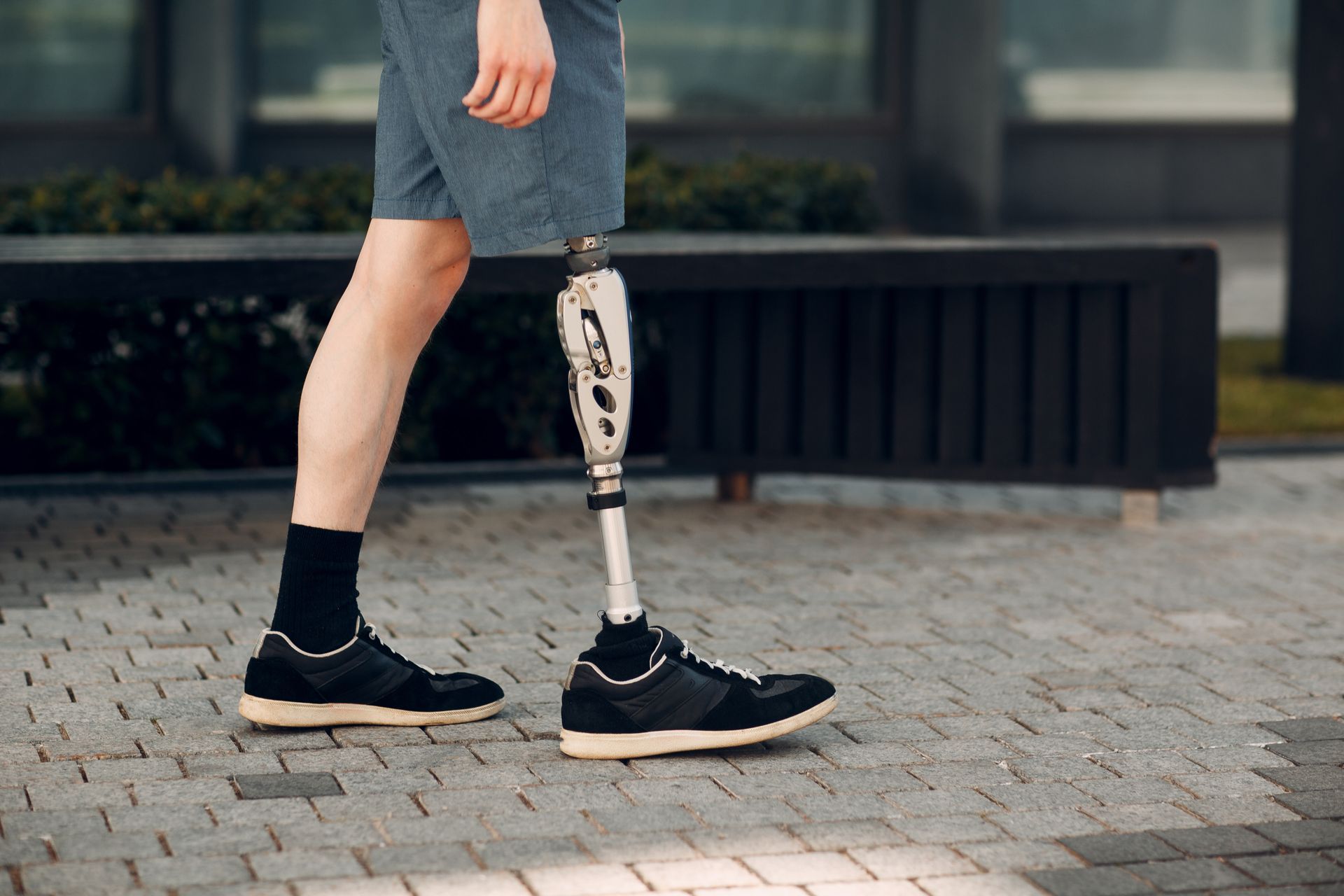
For someone using a bilateral below-knee prosthesis, dynamic response feet and ankles that match activity levels should reduce fatigue on varied terrain. Another consideration: Mismatched components create asymmetrical loading patterns that strain the hips over time, so we calibrate height and alignment together. And small discrepancies that might go unnoticed with one prosthetic limb can produce gait deviations or chronic back discomfort with two prostheses.
Our team also acknowledges that bilateral limb loss carries a psychological weight that requires as much attention as physical therapy: Identity and independence are real concerns that typically surface during recovery. We recommend connecting with peer mentors who have achieved meaningful mobility; speaking with someone who’s been through this can really help.
Durrett’s O&P Is a Full-Service Prosthetic Provider
We combine cutting-edge orthotic and prosthetic technology with a deep commitment to patient care. Following a comprehensive evaluation, we custom-fit every device to ensure peak comfort and mobility. And by staying current through ongoing clinical education, our practitioners provide the most advanced solutions available. We accept Medicare, Kentucky and Ohio Medicaid, and most private insurance.
Get Prosthetics Near Edgewood, KY, and Lawrenceburg, IN
Living fully and moving independently is a reachable goal when you partner with our highly experienced, certified prosthetic team. Contact us for an appointment. With two locations in Edgewood, KY, and Lawrenceburg, IN, we proudly serve the areas of Kenton County and Boone County, KY; and Dearborn County, IN.