Walk Tall with a Partial Foot Prosthesis

Every step we take relies on a complex biomechanical process that balances pressure and momentum. When a portion of the foot is lost due to illness or trauma, that balance changes abruptly: The simple act of standing can suddenly feel unfamiliar, demanding a heavy emotional and physical adjustment. At Durrett's Orthotics & Prosthetics, our modern prosthetic services fill that gap and help clients maintain their mobility even after this significant change.
What Is a Partial Foot Prosthesis?
A partial foot prosthesis is a custom device that replaces missing toes or a section of the foot. While higher-level prostheses attach to a residual limb after a full amputation, partial foot prosthetics sit directly inside a shoe or wrap around the remaining parts of the foot to protect sensitive tissue while maximizing natural movement. A well-crafted one redistributes pressure away from vulnerable scars and prevents skin breakdown.
Types of Partial Foot Prosthetics
We customize different kinds of partial foot prosthetics to match specific patient needs:
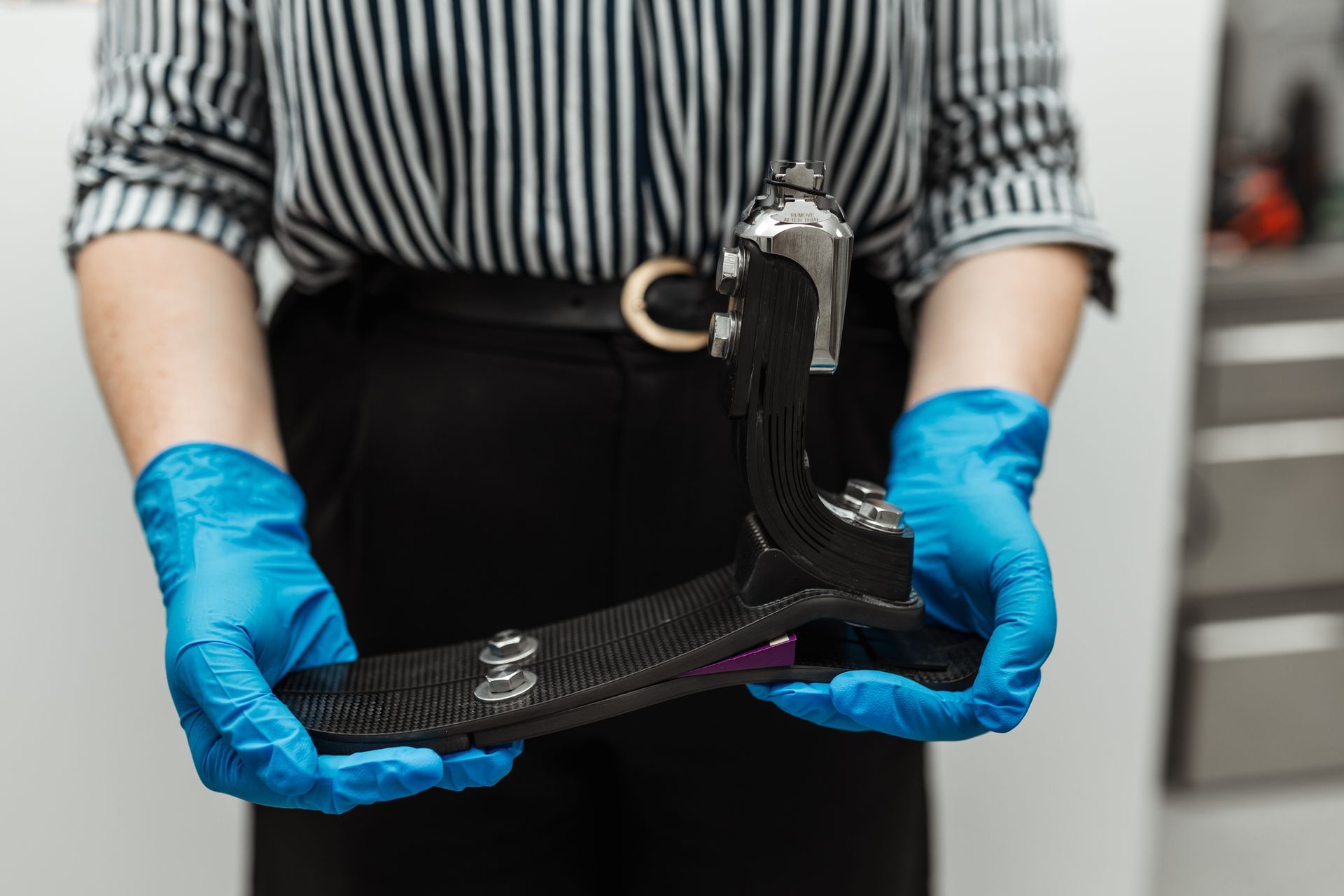
- Dynamic Response Feet use energy-storing carbon fiber to provide a spring-like push-off, reducing walking fatigue.
- Slipper-Style Prostheses are flexible silicone devices that wrap around the remaining foot structure to offer comfortable cushioning indoors.
- Toe Fillers and Custom Orthoses are simple foam or silicone inserts that fit inside regular shoes to maintain footwear shape and prevent sliding.
- Multiaxial Feet flex in multiple directions to help users balance easily on uneven surfaces, slopes, and stairs.
- Chopart and Lisfranc Devices extend up the ankle to restore the natural walking leverage lost from midfoot amputations.
- SACH Feet (Solid Ankle Cushion Heel) are durable options that use a compressible heel wedge to absorb shock.
What to Expect from a Partial Foot Prosthesis
Once you start using a partial foot prosthesis, you’ll notice immediate functional improvements, although your body will require a brief adaptation period. The primary benefit is the restoration of proper gait alignment, which reduces strain in your ankles, knees, hips, and lower back. By recreating the entire surface area, the prosthesis reestablishes structural symmetry, protecting your other joints from chronic fatigue. It also makes your heel-to-toe stride more efficient.
Bear in mind that successful long-term use of partial foot prosthetics depends on having the right footwear. Extra-deep shoes with removable insoles accommodate the prosthesis comfortably without pinching; a rigid rocker-bottom sole eases the physical effort required to push off.
We advise clients to anticipate a progressive break-in schedule during the initial weeks as the residual limb builds up tolerance to the new pressure distribution. It’s also important to closely monitor your skin health — redness that persists for around 15-20 minutes after removing the device indicates a need for a professional adjustment. Over time, as our experts dial in the fit, the prosthesis shifts from feeling like an external addition to a natural extension of your daily movement.
Get Foot Prosthetics Near Edgewood, KY, and Lawrenceburg, IN
Achieving a reliable, comfortable prosthesis fit requires a dedicated partnership with experienced clinical professionals. Our clinical team at Durrett's Orthotics & Prosthetics focuses on precision engineering and highly personalized care, aligning your device perfectly with your lifestyle goals. Why wait? Contact us for an appointment in Kenton County and Boone County, KY, and Dearborn County, IN.